
Monetisation opportunities for software in the future
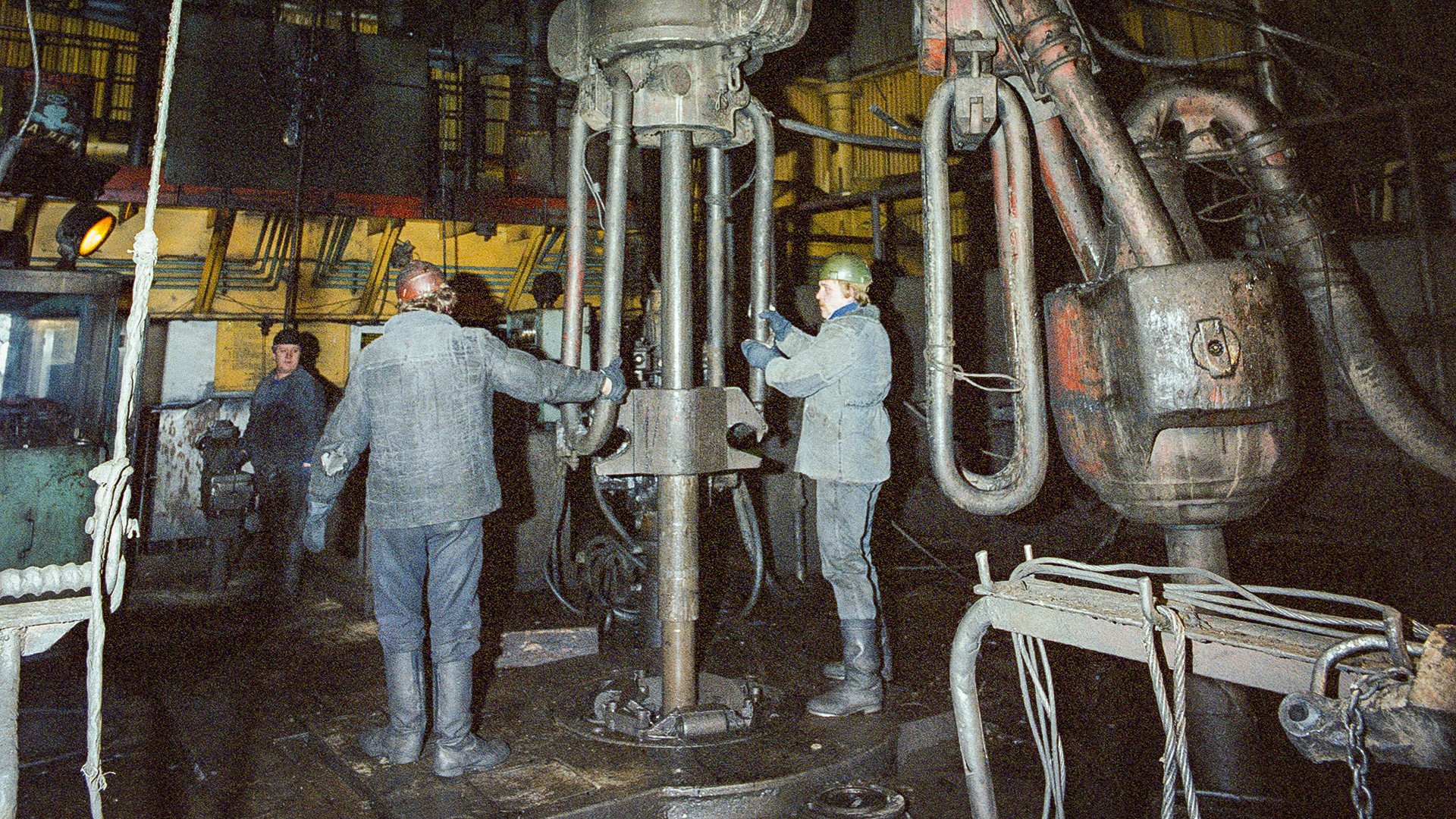
Engineers working on the Kola Superdeep Borehole.
I came across two disparate things over the weekend that got me thinking:
- "The era of paying for software access is over." - https://x.com/BessemerVP/status/2024923411873677682. I'm interested in this part of the post, not the entire thing. We face the same challenge with our large business and enterprise customers where they don't pay for our ability to understand spatial computing, but pay for our ability to use spatial computing to solve their problems. Since I'm no AI expert, I can't comment (nor am I interested) on the AI business model in the rest of the thread.
- "..the hard work actually probably begins where the .99 ends." - https://freakonomics.com/podcast/are-thousands-of-medical-cures-hiding-in-plain-sight/. This podcast is about the economics of repurposing known drugs for diseases that do not have a known cure. And this conveys how much real work starts after the algorithm makes a 0.99 match for a drug and an incurable disease. This is consistent with all customers we work with (oil & gas, automotive, manufacturing, etc.), where software forms a few percentage points of all the work they do while the rest is non-software, and hence a few percentage points of their expense/revenue as well.
This is the norm at Fabrik, atleast for the last few years. Customers pay for the value generated by the software rather than pay just for access. Whether it's for decades-old control systems software in oil refineries or state-of-the-art AI intelligence layer for infotainment units in cars, payment is tied to the value created by the software. So, what's the problem?
The software conundrum
Pure-play software vendors need to generate this value within a few months of their engagement with customers to ensure longevity of an account and sustainability of their business. And true value is not generated within a few months. It takes atleast a couple of years of commitment with the customer and visa-versa, customer committed to the vendor to start looking at reasonable ROI. So, any software business model that involves quick turnarounds for tough problems is unlikely to work.
In addition, there is a glut in supply of software solutions and individual techbros working out of their laptops around the world writing or generating software. The demand on the other hand is restricted to a few percentage points of revenue generated by most small and large businesses. And this means, the ability to sustain and scale software operations is by the value created, and there is an disproportionate supply-demand gap. More specifically, there's a disproportionate gap in quality of good individuals and teams, and the rest of the software ecosystem making the supply-demand problem acute. Adding insult to injury, we have GPTs forcing software players and techbros race to the bottom by pricing themselves cheaper than alternatives from the few percentage points of revenue. And customers without software expertise can put code together from GPTs to avoid dealing with outside software teams.
So the problem is, how can I stay relevant and valuable for my customers in the long-run irrespective of changes in software technologies? This is not an AI vs. human or AI augmenting human problem in the software sector, but something more fundamental in the viability of software industry - especially as a job-creating category going forward.
The answer so far - tight coupling with solutions
The standard SaaS playbook has not worked for us. We cannot sell our software expecting our customer to figure out what to do with it. They have problems to solve under time and resource constrainted conditions, not have the luxury to browse through Product Hunt. They want a solution that solves the problem for them - and that means we working closely with our customers for a long time, learning their process, iterating with them, and eventually showing the solution works. It's like a VC investment (that's typically compared to a marriage), you are joined together from the hip for a long time. Quick fix solutions do not work - all the quick fix solutions have been implemented to achieve quick fixes. The current problems are hard, requiring time and effort to understand and solve. A software vendor is expected to get their hands dirty like their customer to find a solution, and the enterprises are willing to wait for it. So, that's exactly what we need to do - find ways Fabrik can solve the problem for that customer. The challenge however, is the disparate nature of problem statements even within the same sectors.
Inch wide and mile deep
Work patiently with customers building trust, we need to be inch wide and mile deep, making a few of these inch wide holes in different sectors. Going deeper and deeper in the solution tightly couples the software as a part of the overall offering. For e.g., in the drugs repurposing case, the algorithm is possibly limited to measuring the likelihood of one drug curing a completely unrelated disease based on adjacency of symptoms, chemical compounds and their reactions, etc. In addition to estimating the adjacency, if my software does clinical trial simulations with digital twin replicas of human beings - that's the next step intighter coupling. These simulations can further monitor digital twins patients' reaction over short-term and long-term to evaluate side effects, relapses, etc. All these software developments can only be done by folks who are committed to the project for atleast a few years. In most instances these things tend to be developed in-house because it is difficult to find tech. startups or external partners to provide reliable time commitment.
Whether it is AI-generated, programmed by a human being or a vibe-coded combination with a clown on it, it will create value only through tight coupling with the solution. The coupling will happen through long duration of relationship building and trust exercises with customers proving that you are not a fly-by-night operator, you have the patience, persistence and grit to solve the problem, and you care for these solutions as deeply as your customers. These are the only distinguishing factors that gives us a leg-up vis-a-vis all the other software developers and techbros in the market around the world today, or the ones that will spring-up in the future (I'm thinking connected humans thinking AI-generated code on-the-fly).
Conclusion
I'm certain there are other ways to monetise, and I would love to hear more of them. We've discovered the time and patience route to staying relevant as a software vendor for the long-run. Maybe jumping into hardware might be another route with tightly coupled software, it's well-proven with Apple's playbook. But that requires tremendous upfront hardware investment, and in the absence of that capital, we fall back to time and patience. But write to us and let me know what other playbooks have worked.
Unrelated side-note
On a side note, David Fagjenbaum on the Freakonomics podcast casually mentioned Serum Institute of India being a key partner in a study to bring down cost of pneumococcal vaccine and saving 700,000 lives. That's work as usual for Serum Institute of India (kudos for that), but I came across this a few years after the fact on an economics podcast in the US while equivalent sources in India have not covered it. Or maybe I'm living in a cave.


